

WARNING - This page contains medical photos and is only suitable for people 18 years and older
Oncoplastic Breast Surgery
‘Breast cancer surgery’ does not need to mean ‘Breast Deforming Surgery’
What is Oncoplastic Breast Surgery?
Oncoplastic breast surgery is fast becoming the recognized standard of practice in the realm of breast cancer surgery. This innovative approach to surgery combines the fundamental principles of oncological treatment—focused on removing breast cancer—with advanced plastic surgical techniques designed to enhance aesthetic outcomes. The primary aim of this procedure is to effectively remove breast cancer while simultaneously maintaining or even improving the overall shape and appearance of the natural breast. Traditionally, breast cancer surgery has been associated with unsightly scars and deformities, leading to low satisfaction rates and negative body image perceptions among patients once they have recovered from their breast cancer treatment. Oncoplastic surgery seeks to prevent these issues from arising and potentially adds a ‘silver lining’ to a patient's overall breast cancer treatment journey, enhancing their quality of life post-surgery.
Poor scarring after standard Lumpectomy - can be avoided with oncoplastic surgery


When should Oncoplastic Breast Surgery be done?
Oncoplastic breast surgery should be considered for all patients. In many areas of Australia, it is the standard treatment. Dr Green has practiced Oncoplastic surgery for several years due to its benefits. Breast cancer surgery involves removing the cancer along with some normal breast tissue. Research shows that removing more than 7-10% of the breast increases the risk of deformities. Oncoplastic surgery can help reduce this risk. The table nearby shows how much breast tissue is typically removed for different cancer sizes and breast volumes, highlighting that even a small amount of tissue removal can lead to deformities.
Many surgeons previously focused on just removing the cancer without reshaping the breast. This can lead to fluid collection in the cavity, which may look fine initially. However, after radiation treatment, the fluid resolves and the skin can collapse, causing a deformity. This is often wrongly blamed on radiation, but it’s actually due to inadequate initial surgery.

Are there different types of Oncoplastic procedures?
There are varying levels of Oncoplastic breast surgery, each designed to address specific needs of patients. Generally speaking, the higher the level of oncoplastic surgery, the more complex the procedure tends to be. These advanced techniques require specialised training and should only be performed by surgeons who have undergone extensive training in Oncoplastic surgery. The level of oncoplastic surgery that may be most appropriate for you will depend on several important factors. These factors include your current breast shape and size, breast density, the size and location of the tumour, as well as your smoking status. In well-selected patients, oncoplastic surgery is associated with not only a better aesthetic appearance of the breast but also an improved sense of body image and enhanced self-esteem.
Level 1 - Routine on nearly all patients
These techniques should be common practice in breast cancer surgery today. They don't need much extra training and leave scars that are hidden and not visible in exposed areas. They are appropriate for small tumoors and dense breasts.
Level 2
Using breast reduction and lift techniques is helpful for treating tumours in larger and fatty breasts. These procedures are complex and require the skills of a surgeon trained in oncoplastic surgery. They are often called "volume displacement" techniques.
Level 3
Local flaps are used to transfer tissue to the breast to fill in the area that was removed. This method is known as 'Volume Replacement' and works especially well for smaller breasts that have a lot of fat or density.
Examples of Oncoplastic Breast Surgery
Level 1 - Routine and should be done on nearly ALL patients
Round Block - local tissue advancement
Batwing Mastopexy

3cm tumour in inner aspect of breast a notorious spot for deformity to occur

Post excision and Radiation the breast is lifted and has no deformity. A reduction can then be done to match the non cancer breast to improve symmetry
Level 2 - More complex surgery resulting in an altered and often improved breast shape
Therapeutic Reduction Mammoplasty

2.5cm Tumour upper inner quadrant treated with a lumpectomy and Breast reduction - Therapeutic reduction mammoplasty
Level 3 - For smaller breast where tissue is used to replaced the area removed - Local perforator flap
Crescnet Flap -to avoid lower pole ‘Bird Beak ‘ Deformity
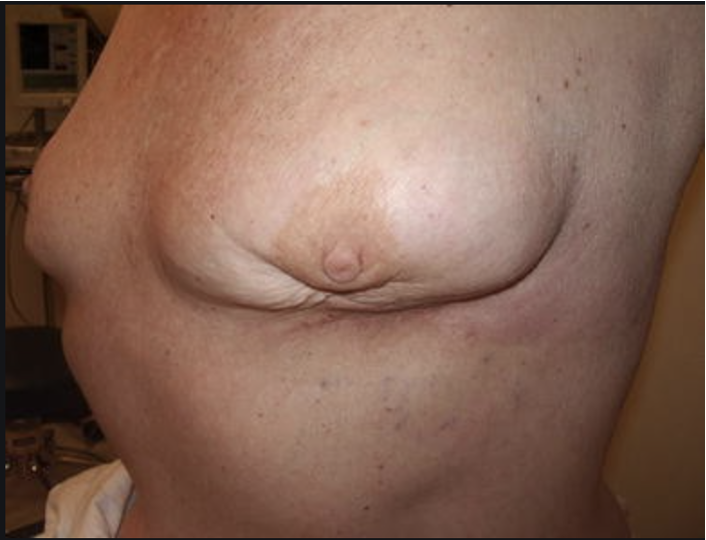
Lower pole tumour excised without oncoplastics - Bird Beak Deformity

Local Perforator flap marked to fill the triangle breast area removed

Green triangle removed, Grey flap crested to move into the breast to replace the excised green area

Pre op (Top row)- flap drawn and tumour marked
Post Op (bottom Row) - no Lower pole deformity
AICAP Flap - lateral tissue used to fill a large defect and avoid a mastectomy
pre-op 4cm area of DCIS marked with hookwires, Lateral perforator flap marked


Post op - clear margins, no deformity in breast


Is Oncoplastic surgery safe?
A very clear answer to the question is indeed a resounding YES. In most larger centres around the world, including Australia, oncoplastic surgery is now considered the standard approach to breast cancer treatment. The numerous advantages to patients receiving this type of surgery are well documented, particularly regarding improvements in body image, self-esteem, and overall satisfaction following breast cancer surgery. Accepting deformities within the breast should truly be a thing of the past in the realm of modern Australian breast surgery. Dr Green co-chairs the BreastSurg ANZ training program, which is dedicated to advancing skills in breast surgery across Australia and New Zealand. As a result, new breast surgeons are comprehensively trained in oncoplastic techniques as part of their standard treatment protocols.
How to check my surgeons is trained in oncoplastic surgery?
Any surgeon trained in Breast Surgery through BreastSURGAnZ since 2009 has learned about Oncoplastic Breast Surgery. Many surgeons who perform oncoplastic surgery have completed fellowships to master these techniques. Your surgeon should provide examples of cases they've handled with oncoplastic procedures. They should also have participated in oncoplastic training courses or completed a post-graduate certificate in oncoplastic surgery, like the one from the University of Sydney. Dr. Green is a section chair for this course and actively participates in oncoplastic workshops by BreastSURGAnZ. Just because a surgeon claims to offer oncoplastics on their website doesn’t mean they are properly trained in it, as these procedures require specialized training for the best results.
How can i confirm I am being offered and hadan oncoplastic procedure?
Oncoplastic procedures should be regarded as the standard of care in Australia for patients undergoing breast surgery. Recently, Medicare has formally acknowledged the inherent complexity of these advanced procedures and their significant importance in the realm of modern breast surgery. Specific item numbers have now been designated to delineate oncoplastic procedures, thus establishing a clear distinction from standard breast surgeries. For instance, item numbers 31512 for a standard lumpectomy, 31513 for a Level 1 oncoplastic procedure, 31514 for a Level 2 oncoplastic procedure, and item 31512 combined with 45537 for a Level 3 oncoplastic procedure are now in use. If you are receiving a quote that includes these item numbers, you should be assured that you are being offered an oncoplastic procedure rather than a standard lumpectomy. Should you find yourself unsure about the specifics, it is advisable to ask your surgeon to clearly explain how these procedures differ from a conventional lumpectomy. If you still remain uncertain after this conversation, seeking a second opinion can be beneficial for your peace of mind.
Can I ask for an Oncoplastic Procedure?
Surgical options should always involve a thorough and transparent discussion between a patient and their surgeon. The decision-making process should focus on what is medically necessary rather than merely on what is desired. However, if you are not being offered a surgical procedure that properly considers factors such as your breast shape, scar positioning, and the possibility of altering the breast shape or size, or even maintaining the current breast shape and size, you should feel comfortable asking your surgeon if they are capable of performing an oncoplastic procedure. If an oncoplastic procedure is not offered, you should not hesitate to request a referral from your doctor to consult with a breast surgeon who frequently performs and offers the full range of oncoplastic procedures. There is always time with any breast cancer diagnosis to seek an alternative opinion when it comes to your treatment options.